
Invest With Perspective
The deal isn’t
just the property.
The numbers, the use and the exit matter too.
A property can look attractive and still be a poor investment.
The objective is to understand how purchase price, financing, income, expenses, condition, location, future use and exit strategy work together before capital is committed.
Whether the opportunity involves a rental property, value-add acquisition, land, commercial property or another nontraditional opportunity, the process begins with the same question:
Does the deal make sense?
Investment Representation
Start with the objective. Not the listing.
Investors can pursue very different outcomes.
Some prioritize cash flow. Some prioritize long-term appreciation potential. Others may prioritize:
- Land
- Future development
- Business use
- Tax strategy
- Portfolio diversification
- Repositioning an underperforming asset
The property should be evaluated against the objective.
Not the other way around.
Before the Search
What is this property supposed to do?
01
Income
Is the objective immediate rental income?
What rent appears realistic? What vacancy assumption is appropriate? What operating costs affect the return?
02
Appreciation Potential
Long-term value growth may matter, but it should not be treated as guaranteed. Consider:
- — Neighborhood trajectory
- — Development
- — Infrastructure
- — Housing supply
- — Employment
- — Transportation
- — Market demand
03
Value-Add
Can the property be improved physically or operationally? Potential examples:
- — Renovation
- — Better management
- — Repositioning
- — Additional utility
- — Resolving deferred maintenance
Improvement is a possibility to evaluate, not a guarantee of value.
04
Use
What is the intended use?
- — Long-term rental
- — Owner-occupied investment
- — Commercial use
- — Land hold
- — Redevelopment
- — Mixed-use
- — Future development
- — Another strategy
05
Hold Period
A one-year strategy and a ten-year strategy should not be evaluated the same way.
Time affects financing, renovation, cash flow, market exposure and exit decisions.
06
Exit
How does the investment eventually end?
- — Sale
- — Refinance
- — Continued hold
- — Redevelopment
- — Conversion
- — Another disposition
The exit should be considered before acquisition.
Underwriting
The story has to
work on paper.
Investment real estate should be evaluated with assumptions that can be tested.
Depending on the opportunity, the analysis may consider:
If the deal only works when every assumption goes right,
the risk deserves a closer look.
Return
Cash flow and appreciation are not the same strategy.
Some investors want income today.
Others are willing to accept lower current yield in exchange for a property or location they believe may have stronger long-term potential.
Neither strategy is automatically right.
The important part is understanding what you are buying and why.
Market Context
Real estate doesn't exist in a vacuum.
Investment decisions can be influenced by forces outside the property line.
- Transportation
- Infrastructure
- Development
- Employment
- Zoning
- Public investment
- Housing supply
- Business activity
- Neighborhood change
This is where DMV Intelligence becomes relevant.
Regional information should inform the analysis — not replace property-level due diligence.
Explore DMV IntelligenceValue-Add
Improvement should have a purpose.
Renovation is not automatically value creation. Before improving a property, consider:
What will the work cost? Who is the future tenant or buyer? What does the market already support?
Will the improvement increase rent, reduce vacancy, improve resale appeal, or solve a real property issue? Is the investment proportional to the expected benefit?
- Repair
- Renovate
- Reposition
- Operate
- Exit
The goal is not to spend more. The goal is to improve the investment case.
Land
Acreage doesn't equal potential.
Land requires a different kind of analysis.
Acreage alone does not determine value or development potential. Important questions may include:
- Zoning
- Permitted use
- Density
- Utilities
- Road access
- Topography
- Environmental conditions
- Easements
- Setbacks
- Entitlements
- Public infrastructure
- Surrounding land use
Depending on the property and intended use, specialized professionals — such as surveyors, engineers, environmental consultants, appraisers or land-use attorneys — may be required. My role is to help frame the questions and coordinate the real-estate transaction.
Explore Land + DevelopmentCommercial
The property should support the business.
For commercial buyers and investors, the real-estate decision often intersects directly with operations. Potential considerations may include:
- Location
- Visibility
- Access
- Parking
- Zoning
- Build-out
- Lease economics
- Ownership economics
- Future expansion
- Exit strategy
Structure
Not every opportunity fits the standard model.
Some real-estate opportunities involve more complicated ownership, financing or transaction structures.
When a transaction falls outside the conventional purchase model, the important questions become even more important:
What exactly is being acquired? What obligations already exist? What risks transfer with the property? What approvals or lender requirements apply? What legal, tax or financial professionals should be involved?
Complexity is not a reason to avoid an opportunity. It is a reason to understand it.
Capital
Leverage can magnify both sides.
Financing can improve purchasing power and change an investment's return.
It can also increase exposure. Investors should understand:
- Interest rate
- Loan structure
- Down payment
- Debt service
- Reserves
- Prepayment terms
- Balloon risk where applicable
- Refinancing assumptions
I can help coordinate the transaction and help you understand how financing affects the offer structure. I do not provide lending advice — the investor selects the lender and financing strategy.
Risk
The best case is only one case.
Every investment analysis should consider what happens when assumptions change. What if:
- Rent is lower than expected?
- Vacancy lasts longer?
- Repairs cost more?
- Interest rates change?
- Construction takes longer?
- The property does not appreciate?
- The exit takes longer than expected?
A good investment should be understood before the optimistic case is accepted.
The Investment Approach
From thesis to settlement.
01
Define
Clarify the objective and investment thesis.
02
Source
Identify properties aligned with the strategy.
03
Underwrite
Evaluate the numbers and assumptions.
04
Investigate
Review the property, market, documents and risks.
05
Position
Develop acquisition terms.
06
Negotiate
Address price, contingencies, timing and deal structure.
07
Diligence
Coordinate appropriate property-specific review.
08
Close
Manage the transaction through settlement.
09
Operate / Exit
Keep the original strategy in view after acquisition. Property management, accounting, legal and investment-advisory services are provided by separately engaged professionals.
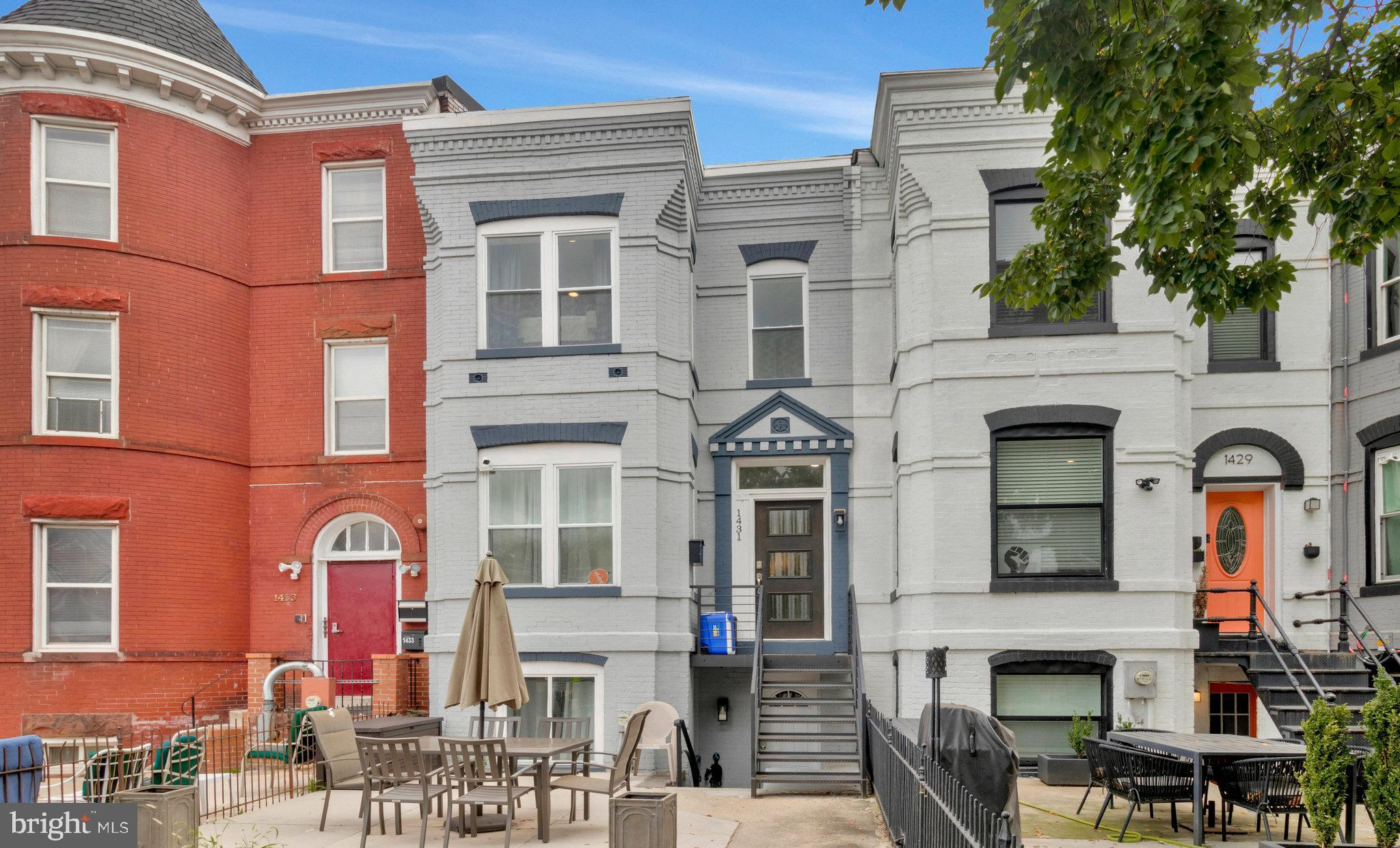
1431 New Jersey Ave NW · Washington, DC · Seller Represented
Investment Property in Practice
The property was part of a bigger plan.
This property was held as an investment property by a repeat client and later sold as part of a broader real-estate strategy.
Investment property decisions rarely exist in isolation. The New Jersey Avenue transaction formed one part of a broader client relationship involving multiple purchases, sales and changing objectives.
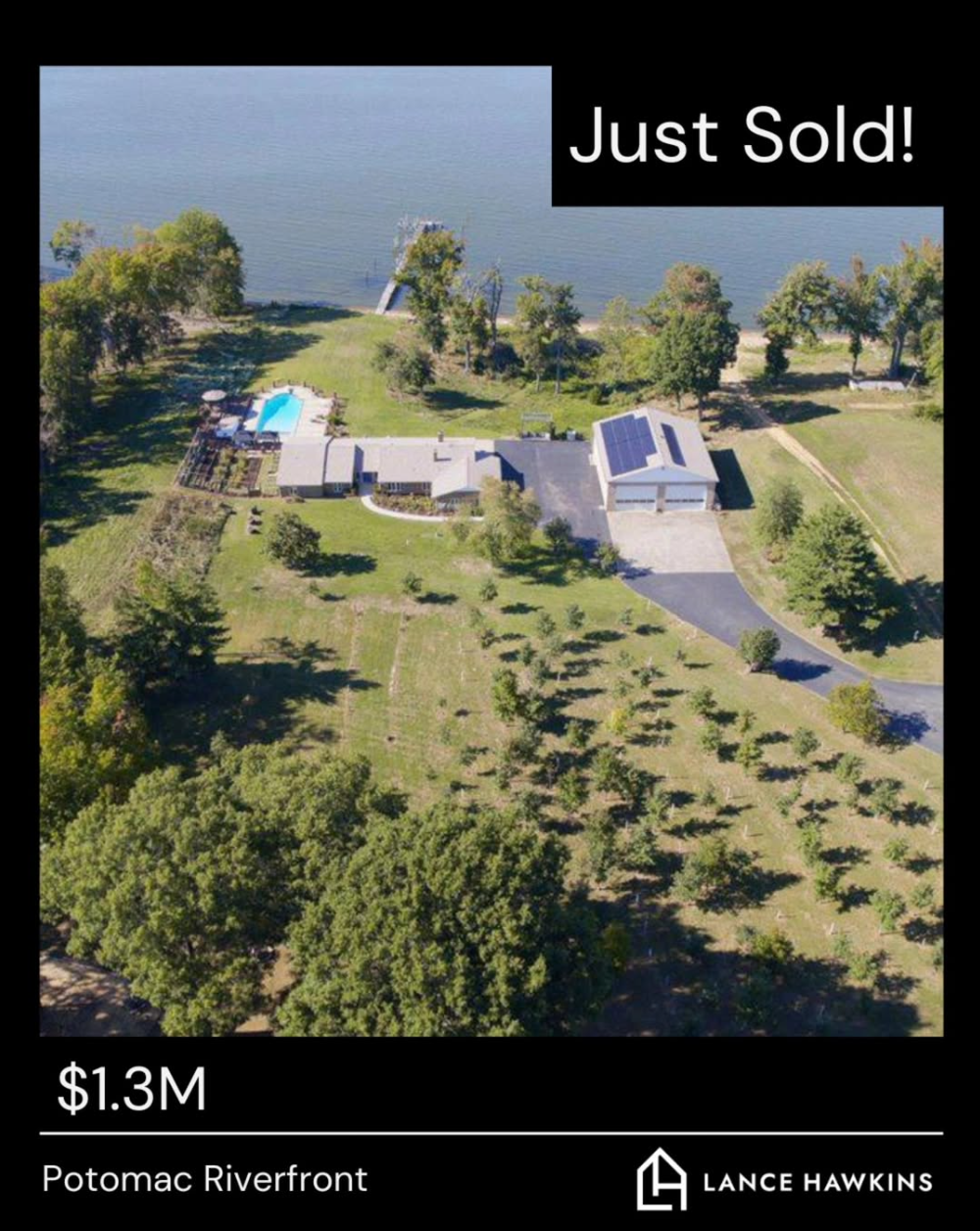
1555 Ben Doane Rd · Potomac Waterfront · Buyer Represented
Property Range
Some deals require more questions.
Acreage, waterfront, a deep-water dock and auxiliary structures each add questions that a conventional purchase may not raise.
Range across the portfolio also includes land, such as the seller-represented sale of 8012 Holly Ln.
- 6.58 Acres
- Potomac Waterfront
- Buyer Represented
Analysis Tool
Test the assumptions.
An educational starting point. Inputs stay in your browser and are never saved.
Estimates Only
Actual performance may differ. This tool is for general educational purposes and does not constitute investment, tax, legal, lending or financial advice.
Discipline
Not every opportunity deserves capital.
Finding a property is easy.
Finding a property that fits the strategy is harder. A deal may deserve a pass because:
- The numbers are too thin
- The risk is too high
- The assumptions are too optimistic
- The use is uncertain
- The property requires too much capital
- The exit is unclear
- It simply does not fit the investor's objective
The objective is not to buy more property. It is to make better real-estate decisions.
The Team
Investing can require more than a Realtor.
Depending on the transaction, investors may need advice or services from:
- Lender
- CPA / Tax Professional
- Real-Estate Attorney
- Title Professional
- Home Inspector
- Contractor
- Engineer
- Surveyor
- Environmental Professional
- Property Manager
- Land-Use / Zoning Professional
Lance's role is real-estate representation and transaction strategy.
Specialized legal, tax, engineering, environmental, lending and investment advice should come from appropriately qualified professionals.
Questions
Investor
questions, answered.
Investment Consultation
Talk before you
commit capital.
Capital With Intention
What does the deal
need to do for you?
The right investment begins with a clear objective and assumptions that can survive scrutiny.
Let's talk through the property, the numbers, the risks and what the opportunity needs to accomplish.